Technology
When Does AI Become Part of the Homework?
The dilemma of using AI for assignments is when assistance begins to replace the assignment.
AI Is Already Part of the Homework
For many students, artificial intelligence is no longer confined to the realm of speculation. Artificial intelligence can come as a tool alongside the common tools of homework: the search engine, the calculator, a grammar checker, or a messaging platform.
A student can use an AI tool for an explanation, suggestions, a grammar check, a summary, or help organizing a project. Any of these is still valid assistance, but none are necessarily a replacement for the work being done by the student.
The challenge begins when the tool can also write, answer, solve, or produce information.
Once the question of whether AI was used has been answered, it is more useful to consider what the student actually did with it for their assignment.
Assistance Is Not the Same as Substitution
There is a major difference between a student who asks for help and a student who asks for an answer.
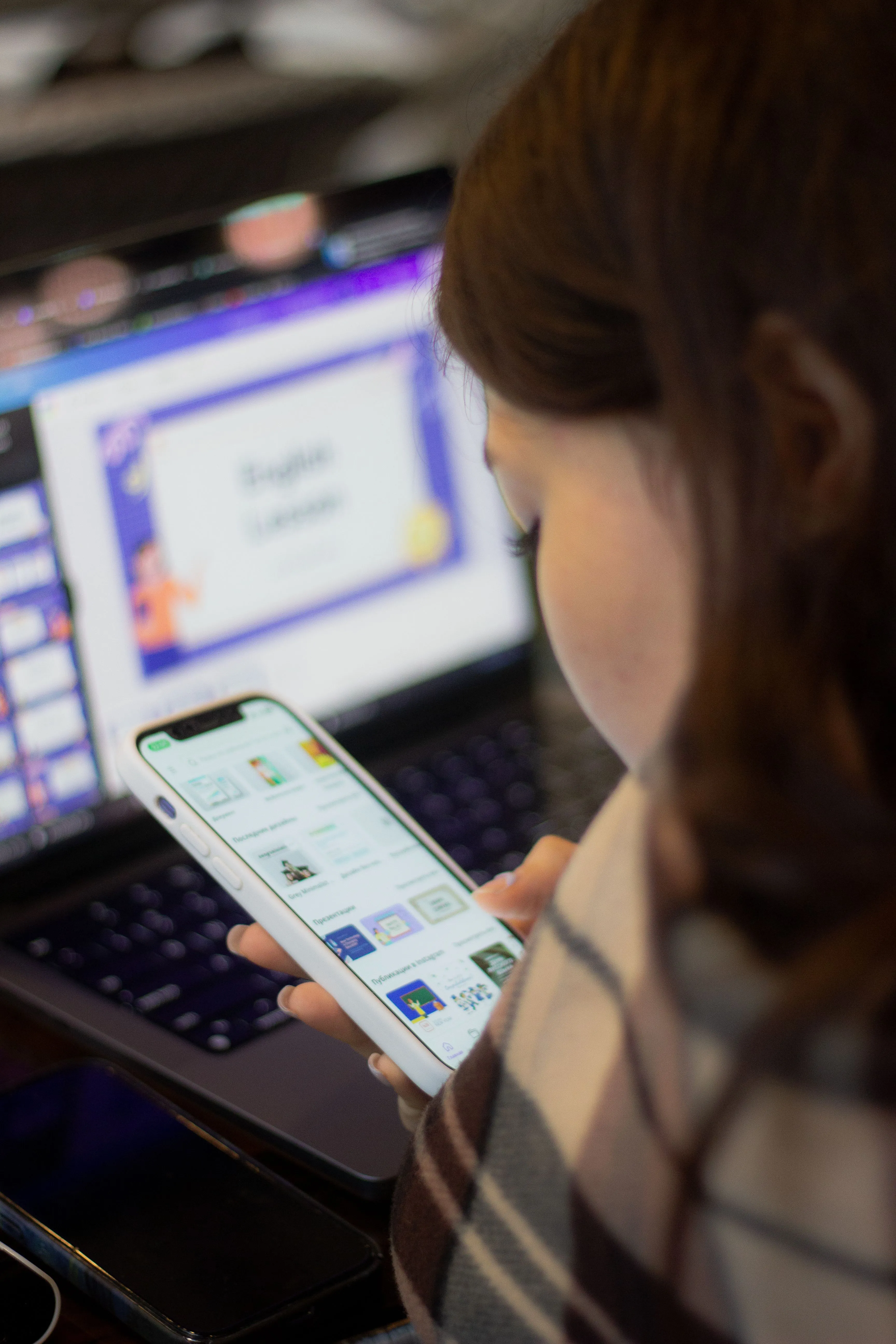
A student who asks AI to explain photosynthesis still needs to understand the explanation. A student who asks AI for possible topics for a research paper still needs to choose a topic, investigate, and create an argument. A student who asks AI to identify awkward phrases in their drafting still has a draft to revise.
A student who leaves an assignment to an AI system and submits the result with few meaningful contributions has taken on a different task.
It is easy to confuse the two, because either can result in a completed assignment that has few visible problems. The distinction between assistance and replacement is difficult to identify, as the work is not what changed, but what happened in the process of getting there. This is part of why AI differs from other tools. A calculator can perform a calculation, but the AI system can generate an entire response to an open-ended prompt. The more the task is handed to the system, the less scope the student has to practice the skill the assignment is intending to hone.
Filipino Students Are Already Using AI for Their Homework
Research in the Philippines has demonstrated that students are not using ChatGPT simply as a means to an end.
A 2024 study of Grade 12 Technical-Vocational-Livelihood students in the Philippines examined the effects of ChatGPT on academic writing. The intervention group using ChatGPT improved from a low level to a satisfactory level, while the control group stayed on a fair level throughout the study. This indicates that AI can be a useful tool when incorporated into the educational process as an additional step, rather than used as a replacement for effort (Maghamil & Sieras, 2024).
Another study conducted on Filipino senior high school students at De La Salle University–Manila on the uses and impacts of ChatGPT in academic writing also found concerns about accuracy and limitations in the material it generated, while students commonly used the technology for grammar correction, paraphrasing, and referencing (De La Salle University Integrated School, 2024).
The complexity of the issue should be evident from these examples. The same AI technology can help a student work through a problematic assignment and allow that same student to completely circumvent engaging with the assignment.
The Shortcut Can Become the Assignment
The purpose of homework is more than just answers.
An essay is a way for the student to organize and express information. A mathematics problem is a way to practice applying concepts. A research assignment is an opportunity to find, evaluate, and curate evidence. Each of these becomes significantly less valuable if the AI does most of it for the student.
This does not necessarily mean that AI always takes away from learning. A student can use an explanation provided by AI as an opportunity to verify the explanation with textbooks, lectures, research papers, or other sources. They can use it to recognize gaps in understanding or ask questions they were not previously able to ask.
The point is whether the use of AI is a means of engaging with and learning from the assignment, or a means of avoiding it.
When Convenience Starts Working Against Learning
Another problem with AI assistance is that it can render inconvenient processes and practices unnecessary.
Writing an introduction from scratch is frustrating. Working through a problem is tedious. Searching through multiple resources is time-consuming. These are not always weaknesses in the learning process, but sometimes the process.

A 2024 study of Filipino undergraduate engineering students regarding the use of ChatGPT found that students used it for writing assistance, academic support, learning enhancement, and productivity, while expressing concerns about overreliance and the impacts on creativity and problem-solving (Giray & Aquino, 2024).
That concern is valid to consider, but not because the use of AI will necessarily lead to such an overreliance. The real question is what happens when the student repeatedly removes the inconvenient portion of an activity.
The advantage of convenience is real, as is the risk that it will change what the student practices.
When every challenging explanation is outsourced, there are fewer opportunities to practice explaining. When every first draft is generated, there are fewer opportunities to practice writing. When every problem is solved by a machine before the student attempts it, there is less incentive to develop the process of solving it individually.
The Problem Is Bigger Than Plagiarism
The issue of AI in school revolves heavily around cheating and plagiarism, but the problem is not limited to when a student copies text.
A student can submit fully original AI-generated text and fail to meet the assignment requirements, simply because they did not engage in the understanding or investigation the assignment was intended to facilitate.
This is one of the reasons AI-generated work creates such a unique problem in schooling: the final product can be improved, but it tells the teacher even less about what the student is capable of.
A 2025 study of the motivations of Filipino undergraduate students who admitted using generative AI technology to cheat in writing found that some students rationalized this behavior as a coping mechanism for their academic pressures. The researchers also identified peer influence and institutional ambiguity as factors in the normalization by students of AI-assisted cheating (Giray et al., 2025).
The issue is not that all Filipino students engage in AI cheating, nor is it that they do so commonly. The study focused specifically on students who admitted to this behavior. What it does demonstrate is that the lines between legitimate assistance and academic misconduct can become blurred when students, peers, and institutions do not share a definition of appropriate AI use.
Students Still Need to Know What They Are Submitting
The responsibility of a student does not end just because they are using an AI tool.
If a source is presented, the student should be familiar enough with the source to verify its existence and relevance to the argument. If an explanation is presented, the student should verify that the explanation is accurate. If a paragraph is rewritten, the student should understand what it is saying.
This matters, because AI systems can generate information that sounds authoritative, but is ultimately misleading or incomplete. A well-constructed response is not always a reliable one.
UNESCO’s guidance on generative AI in education similarly emphasizes the importance of learners critically evaluating AI outputs and institutions developing guidance for ethical and responsible use, as well as ensuring that assessments prioritize abilities that should remain with the human learner rather than tasks that generative AI can perform (UNESCO, 2023).
In other words, the student cannot be absolved of responsibility simply because they used an AI system for their assignment.
So, When Does AI Become Part of the Problem?
There probably is not one universal line between acceptable AI assistance and unacceptable AI assistance. Different teachers, schools, or assignments can have different expectations.
But there is a significant question a student can ask themselves before assigning work to an AI tool:
What am I supposed to learn by doing this myself?
It would defeat the purpose of an assignment if the student were to ask AI to write the paper instead of writing it themselves. It would defeat the purpose of an assignment if the student were to ask AI to solve the problem before attempting it themselves. It would defeat the purpose of an assignment if the student were to accept an AI-generated list of possible sources instead of searching for them and verifying their credibility.
AI can certainly continue to be a part of each of those assignments and processes. It can explain, suggest, question, organize, and provide feedback. It can make a difficult assignment more approachable.
But assistance works best when the student is still practicing the skills the assignment was intended to help them practice.
The Homework Is Still Yours
Artificial intelligence has expanded the scope of what a student can do with a computer. A tool once used to check spelling can now explain, suggest, question, organize, rewrite, or even produce an essay in seconds.
This does not necessarily make the technology the problem.
The more pressing issue is what happens after an answer is generated.
A student can use an AI system to learn something new and continue their work. They can use it to understand something they did not understand before. They can use it to analyze their own work.
Or they can press a button, paste the result, and move on.
The results of either approach can look like a completed assignment, but they are not the same learning experience. Homework is not just about creating something that can be submitted. It is one of the places where students are expected to practice thinking, writing, solving problems, researching, and making decisions on their own.
AI can be a part of that process. Just not when it is quietly taking it over.
Sources
Maghamil, M. C., & Sieras, S. G. (2024). Impact of ChatGPT on the Academic Writing Quality of Senior High School Students. Journal of English Language Teaching and Applied Linguistics, 6(2), 115–128.
Giray, L., & Aquino, R. (2024). Use and impact of ChatGPT on undergraduate engineering students: A case from the Philippines. Internet Reference Services Quarterly, 28(4), 453–462.
Giray, L., et al. (2025). Cheating Writing with Generative AI: Exploring Student Motivations Using the Theory of Planned Behavior. Journal of Academic Ethics, 24, Article 19.
De La Salle University Integrated School. (2024). Investigating ChatGPT's Performance in Students' Academic Writing.
UNESCO. (2023). Guidance for generative AI in education and research.