Social Media & Online Behavior
Social Media, Attention & Screen Time
A few minutes of scrolling can become much longer, and it is not always the result of a person lacking discipline.
A few minutes can become much longer

There is something strange about opening social media for “just a few minutes.” You check one notification, then another post appears, then a video catches your attention, and then another one starts automatically. Before long, your few minutes are no longer just a few minutes. This does not necessarily mean that someone lacks discipline. Social media is, after all, a continuous stream of content meant to hold someone’s attention. The more interesting question is what happens to a person’s life when this is the norm.
Attention is not just about screen time
It seems tempting to believe that the solution is simply to spend less time looking at a screen. Time does matter, but it is not the whole story.
A student may spend two hours on their phone, but the two hours could have had a very different impact depending on what they were doing on the phone. Perhaps one of the students spends the two hours talking to friends or working through a school group chat. Perhaps another of the students spends the same two hours flipping from one brief, forgettable video to another with no intent of staying engaged with anything for long. The time spent is the same; the activity is not.
A 2024 umbrella review of research on adolescents found that the relationship between social media use and well-being depends on factors such as individual characteristics, the type of use and the design of the platform. The researchers also noted that existing evidence is difficult to interpret because studies measure social media use differently (Sala et al., 2024).
This is why “screen time” can be a helpful measure but should not be used as a complete explanation.
The problem with endless content

One of the easiest parts of getting sucked into endless scrolling is that there is rarely a moment when it is clear that it is time to stop. A television episode ends, a book has a final page, and a school assignment has a point where you can decide that it is, indeed, finished. A social media feed can roll on for as long as you want.
There is always another post, another video, another comment, another notification. It is a slightly different kind of decision than having a final point in an activity, because you have to decide to stop yourself. This can be hard to do when the content is interesting enough to keep your attention but not important enough to remember after you have stopped.
Not all social media use is the same
“Social media use” includes a variety of different behaviours: someone checking a class announcement is using social media, as is someone talking to a close friend or watching educational content. Someone repeatedly checking their feed even when they intended to study is also using social media. To treat all of these as the same is to make an important distinction impossible to make.
Research among young Filipino undergraduates has made a similar distinction between problematic and reflective social-media use. In a study of 1,087 Filipino college students, problematic use was associated with lower subjective mental well-being, while reflective use was associated with better well-being. The study was cross-sectional, however, so it cannot establish that one type of use directly caused the differences in well-being (Cleofas et al., 2022).
When checking becomes a habit
One sign that social media has gotten out of hand is when checking it stops being a conscious choice. You open the app without actually knowing why you are doing it, reach for your phone when there is a pause in something else, check notifications while doing homework, or tell yourself that you will stop after one more video and then do it again. None of these individually indicate that someone has a disorder or an addiction, but they can be signs that a habit is becoming harder to control.
A 2025 systematic review of longitudinal studies found that problematic social media use among young people is influenced by multiple factors rather than one simple cause. The review describes problematic use as social-media engagement that interferes with physical or mental well-being and examined longitudinal evidence on factors associated with its development (Pazdur et al., 2025). That is a more helpful way of thinking about the issue than simply asking whether someone uses social media “too much.”
What happens to studying?
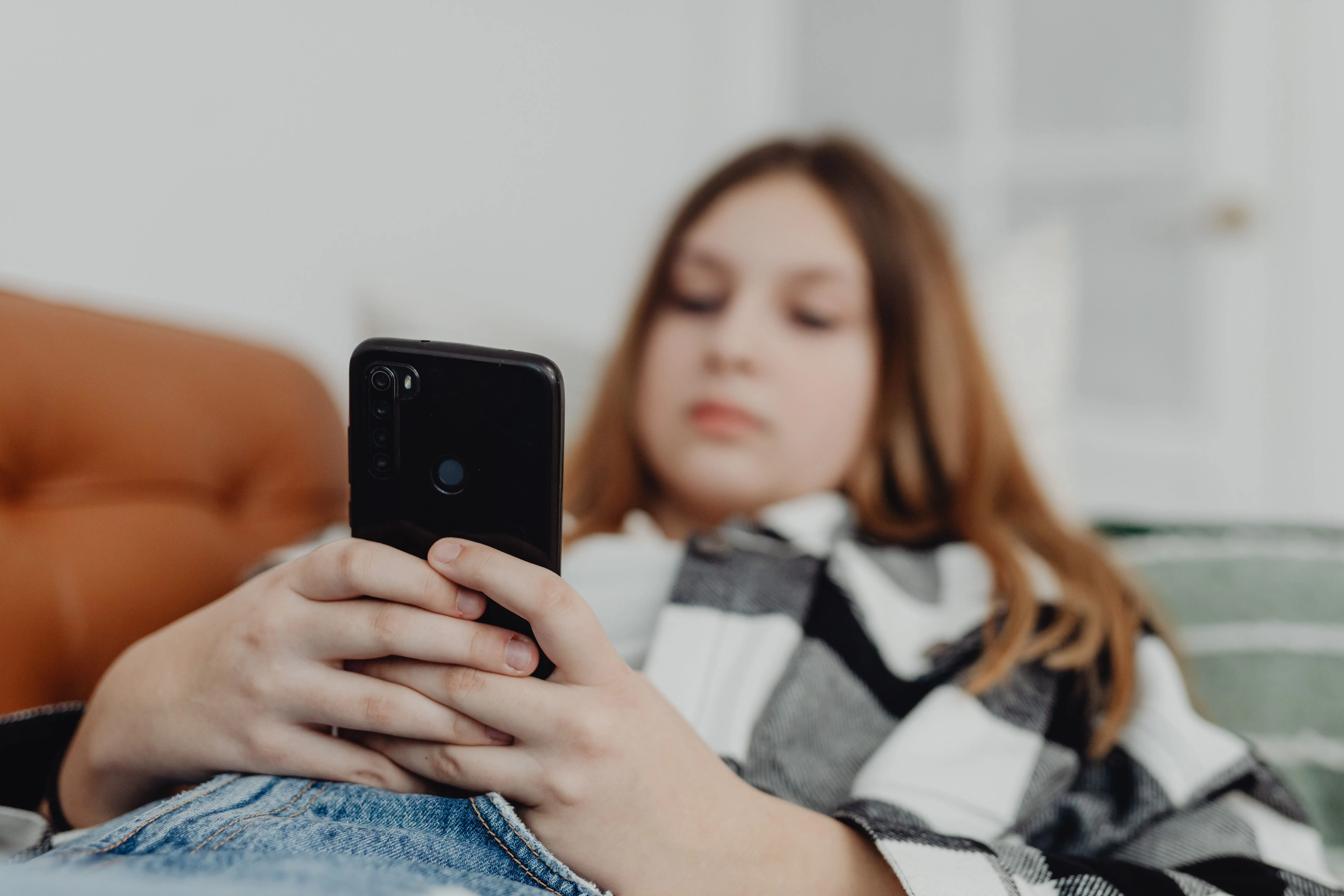
This is where attention becomes especially relevant to students. Studying typically takes some kind of sustained focus, and social media offers a much easier alternative if there is ever a point when that focus is lost. If a textbook becomes difficult, you can pull out your phone; if an assignment becomes frustrating, you can check your notifications; and if there is a pause while doing either of these, it is easy to fill it with something happening online.
The problem may not be the existence of social media. It is how easily it can interrupt something that requires sustained attention that is difficult.
The OECD’s 2026 review, drawing on PISA 2022 data from 15-year-olds, found that moderate social-media use was associated with higher test performance, while excessive use was associated with lower academic performance. In its analysis of PISA 2022 data, mathematics performance declined as social-media use rose beyond roughly three hours per day. The OECD also stresses that these are associations, not evidence that social media use by itself causes lower performance (OECD, 2026).
That distinction is extremely important. A student who spends three hours online is not guaranteed to perform worse than someone who spends one hour; there are a number of other factors that can influence both.
The phone does not have to be in your hand to interrupt you
Sometimes distraction happens without actually touching an application. A notification appears, the screen lights up, you hear a sound, and you wonder who sent the message. Even if you do not check it right away, part of your attention may already have been pulled toward it.
This is particularly evident when distraction takes place during activities that require focus. Studying, reading and writing all require a degree of concentration. Repeated interruptions can make it more difficult to maintain that degree of concentration even if each one seems small. The issue is not how long someone is spending scrolling, but how often their attention is being interrupted from whatever they were doing.
Nighttime scrolling is another problem
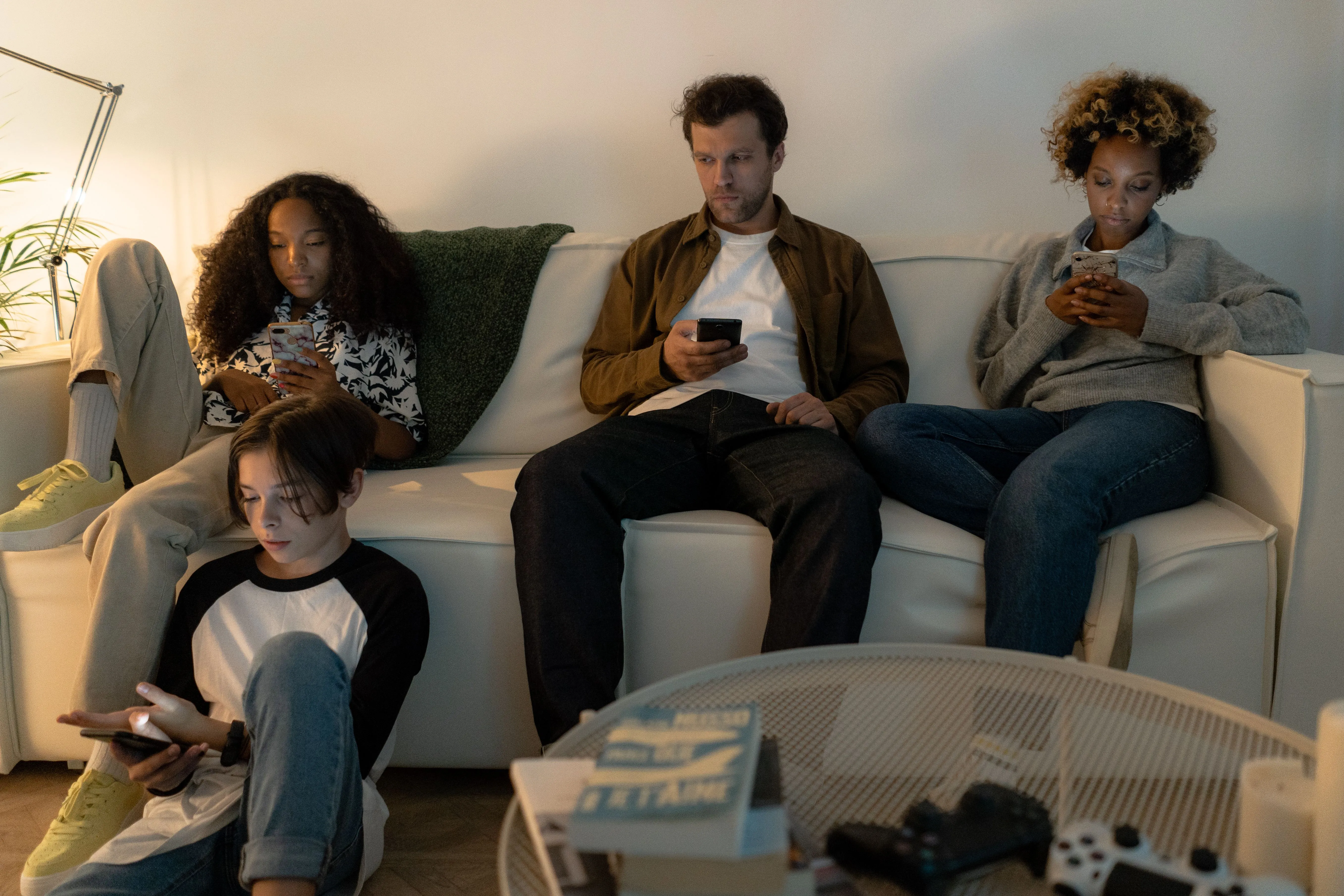
There is the issue of when social media is being used. A student may tell themselves that they are relaxing right before going to sleep, but the phone can turn that period into much longer than expected. One video becomes several, a conversation continues, a notification appears, and the student checks one more thing. Eventually, the time that was supposed to be spent sleeping has become time spent online.
Research on young people has found that there is an especially important distinction between ordinary social-media use and problematic use when it comes to sleep. A 2024 systematic review and meta-analysis covering 182 studies and more than 1.1 million participants found that ordinary social-media use had inconsistent relationships with sleep, while problematic social-media use was associated with sleep problems (Ahmed et al., 2024).
This does not mean that using social media before bed will inevitably ruin someone’s sleep; it means that patterns of use can affect outcomes.
There is a difference between choosing and drifting
One way of thinking about screen time is to ask whether you are choosing to use your phone or simply drifting into using it.
Choosing may mean opening an app because you want to talk to someone, find something specific, watch a particular video or check an announcement. Drifting, by contrast, is opening the app because you are bored, then scrolling, scrolling some more, and realizing that you have spent much longer on it than you wanted to. The difference may seem small, but it changes the role of social media in your day: one is something you are doing, while the other is something that is happening to your attention.
Filipino students experience this too
This is not just a problem that has been discovered in research elsewhere. A study of 500 young college students from rural Luzon during the COVID-19 community quarantine found that 24.2% of respondents met the study’s measure for social media disorder. Researchers also found differences associated with social position and platform use, including higher odds among students from below-middle-income households and those active on TikTok. The study was conducted during community quarantine so its findings should not be treated as a direct estimate of current social-media disorder among Filipino students (Cleofas, 2022).
Another study involving 1,087 Filipino undergraduates found that students’ social-media use increased for many during the pandemic while problematic and reflective patterns of use were associated with mental well-being in different ways (Cleofas et al., 2022). So, the local evidence seems to indicate something more complicated than simply saying that Filipino students spend too much time online. Students use social media for different reasons, and those patterns of use can matter.
So how much time is too much?
There is no single number that can indicate when every student’s screen time has become problematic. A student may spend several hours online because they are communicating with classmates, studying, working or maintaining relationships, while another student may spend less time online but find that their use regularly interferes with sleep, schoolwork, relationships or other things they value.
The more useful question is not only “How many hours did I spend?” but also what I was doing, why I opened the app, whether I stopped when I intended to, whether it interfered with something I needed to do, and whether I felt in control of the decision to keep using it. These questions speak more to a person’s relationship with social media than a stopwatch can by itself.
Getting your attention back
Managing screen time does not necessarily mean deleting every social-media application. Sometimes the smallest changes are enough to make the decision to stop easier: turning off unnecessary notifications can get rid of some interruptions, keeping your phone away while studying can make it less tempting to check, setting a stopping point before opening an app can help you to notice when you have reached it, and going to bed without your phone within reach can create a clear distinction between being online and sleeping. None of these solutions are guaranteed to help everyone, but the point is to make the decision to use social media more deliberate.
The goal is not to hate your phone
It is easy to make discussions of screen time into a lecture about how phones are ruining everything, but that does not exactly describe the way in which students use technology. Social media can be useful: it helps people to communicate, maintain friendships, find information, participate in communities and sometimes simply relax. The issue is that something useful can become difficult to put down.
The useful goal for me is not to spend as little time online as possible, but to be able to decide when I want to be online and when I do not. A few minutes of scrolling can be harmless; the problem comes when those few minutes are no longer something that you have chosen. Your attention is one of the things that you give away anytime you decide to look at something, so it is worth deciding where you want to give it.
The distinction is valuable. Using social media deliberately is different from using it automatically.
Sources
OECD. (2026). Growing up in the social media age. OECD Digital Economy Papers, No. 385. OECD Publishing.
Sala, A., Porcaro, L., & Gómez, E. (2024). Social Media Use and adolescents' mental health and well-being: An umbrella review. Computers in Human Behavior Reports, 14, 100404.
Ahmed, O., Walsh, E. I., Dawel, A., Alateeq, K., Espinoza Oyarce, D. A., & Cherbuin, N. (2024). Social media use, mental health and sleep: A systematic review with meta-analyses. Journal of Affective Disorders, 367, 701–712.
Pazdur, M., Tutus, D., & Haag, A.-C. (2025). Risk Factors for Problematic Social Media Use in Youth: A Systematic Review of Longitudinal Studies. Adolescent Research Review, 10, 237–253.
Cleofas, J. V., Dayrit, J. C. S., & Albao, B. T. (2022). Problematic versus reflective use: Types of social media use as determinants of mental health among young Filipino undergraduates. Health Promotion Perspectives, 12(1), 85–91.
Cleofas, J. V. (2022). Social media disorder during community quarantine: A mixed methods study among rural young college students during the COVID-19 pandemic. Archives of Psychiatric Nursing, 40, 97–105.