Health and Lifestyle
Sleep & Student Life
Sleep affects students’ energy, concentration, routines, and ability to function throughout the day.
Why sleep matters for students
For teenage students between ages 13 and 18, the American Academy of Sleep Medicine recommends around 8 to 10 hours of sleeping per night, which helps health, attention, behavior, and daytime alertness (American Academy of Sleep Medicine, 2019).
“Sleep is essential for optimal health in adolescents.”
American Academy of Sleep Medicine (2019)
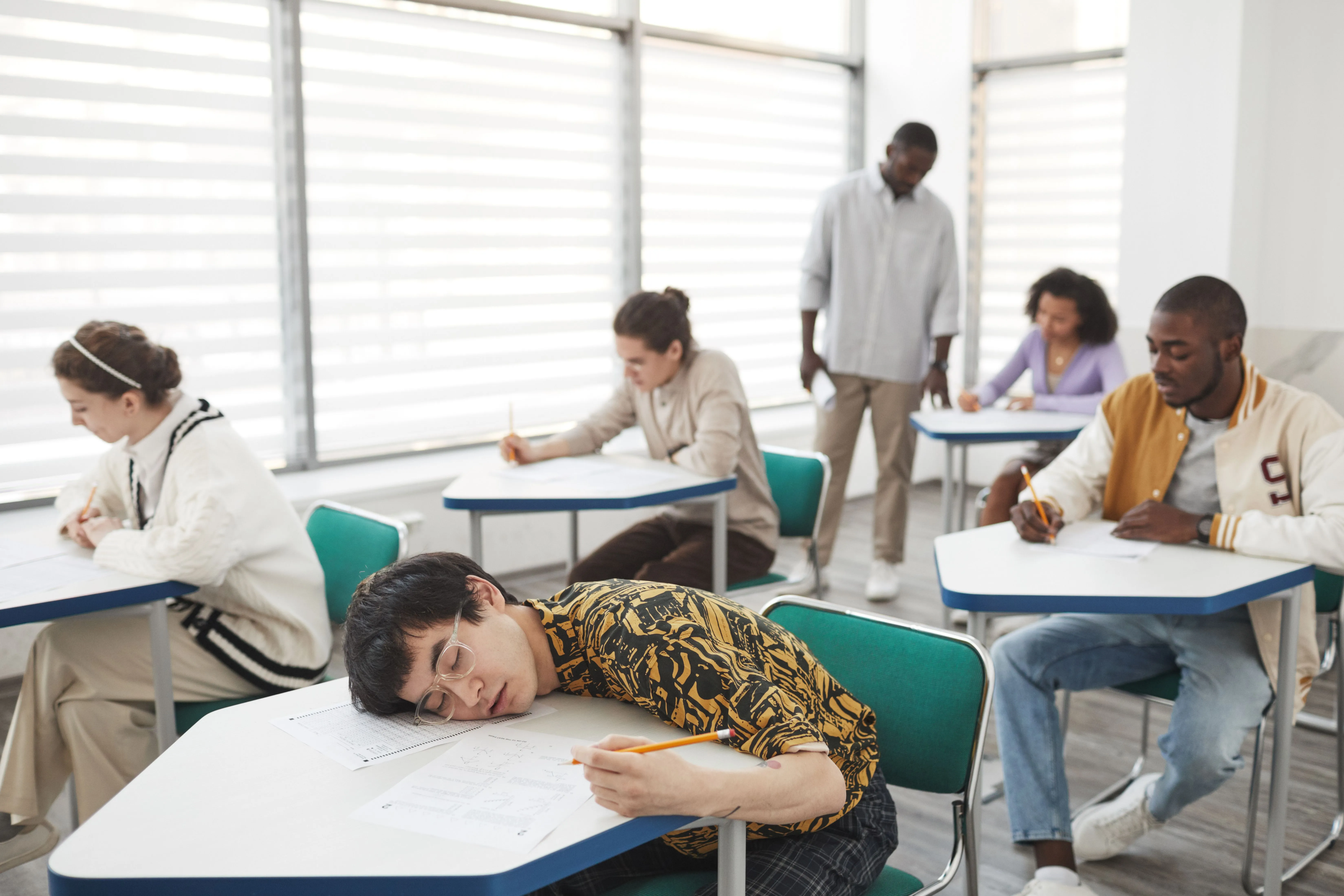
That figure can be surprisingly hard to reach during a normal school week, as students find that a 24-hour day is too short. Sleep is often the part that gets sacrificed when it comes to fitting in classes, homework, commuting, familial responsibilities, social life, and personal time.
The fact of being awake for more hours doesn’t necessarily guarantee getting more done. Sleep and academic performance are related, although the relationship is not as simple as saying that more sleep guarantees higher grades. According to a 2021 systematic review of studies, using secondary-school students as participants, sleep quality had a small positive association with academic performance and sleep duration was not statistically significant in its meta-analysis for its association with academic performance, while the review also observed that studies used different ways of measuring both sleep and school performance, making the relationship not easily one-dimensional (Musshafen et al., 2021).
What is clearer is that too little sleep can make the school day harder.
In a recent 2021 US survey of high school students conducted during the COVID-19 pandemic, 76.5% of respondents reported sleeping fewer than eight hours on an average school night, and students sleeping for a shorter amount of hours were more likely to report having greater difficulty doing schoolwork during the pandemic (Czeisler et al., 2023).
“Most (76.5%) students experienced short sleep duration.”
Czeisler et al. (2023)
The student schedule problem
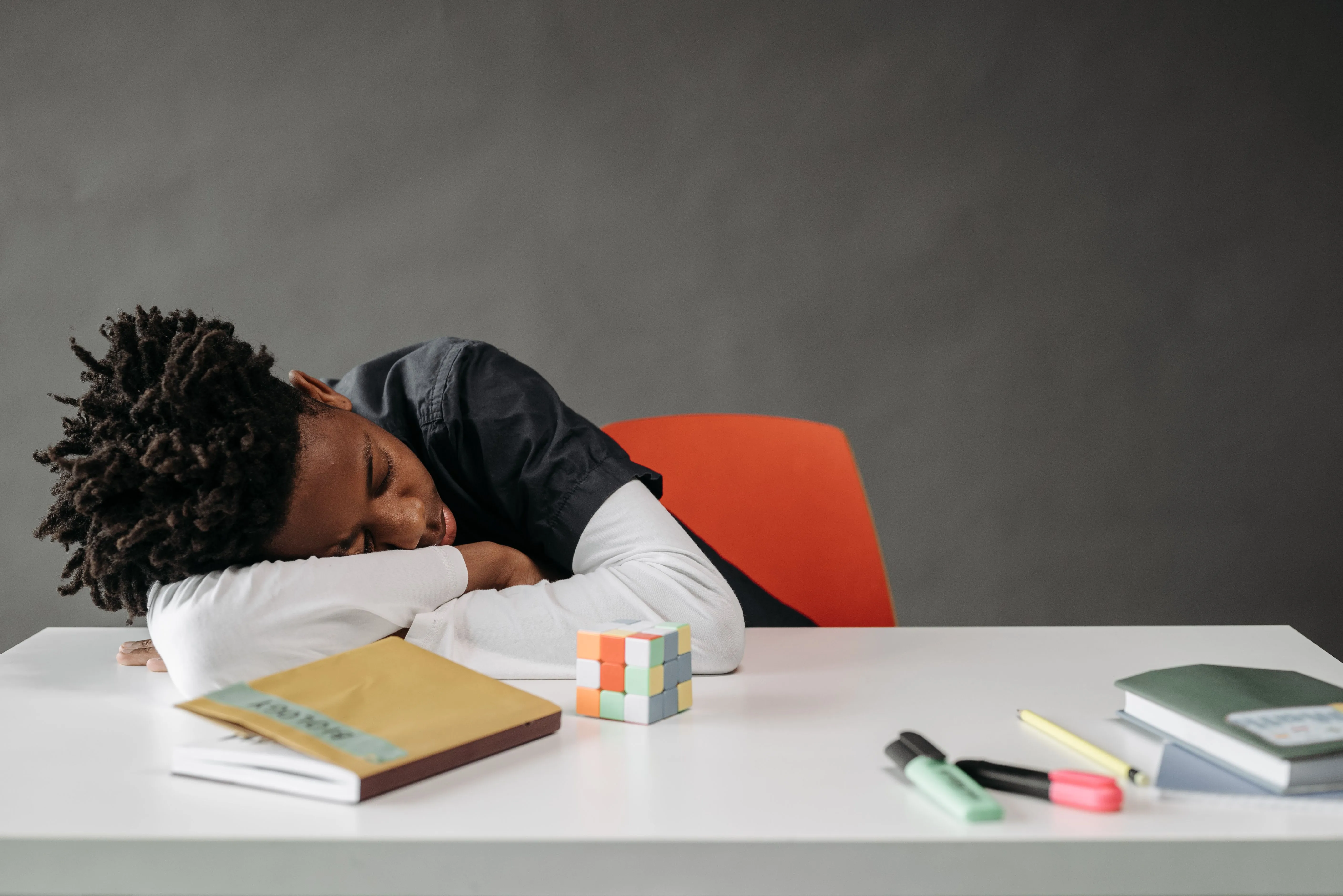
Sometimes the problem is not that the student chooses to stay awake. As adolescents grow older, they tend to drift towards going to bed and waking up later, which can conflict with school schedules that still require students to wake up early.
This can prove to be an awkward discrepancy for a student who doesn’t feel ready to sleep early but has to get up early the next day. If the trend occurs during the week, then the sleep lost during the week can add up.
When it comes to school timing, a change in school start time can make a difference. Research analyzing changes in school start times found that later start times for middle- and high-school students were associated with later wake times and longer sleep duration. In fact, high school students gained about 45 minutes of sleep after their schools’ start time was moved later (Dills & Hernandez-Julian, 2021).
“HS students reported a slightly later average weekday bedtime (14 min), but a later average weekday wake time (60 min), resulting in a clinically meaningful increase in average weekday sleep duration of 45 min.”
Dills & Hernandez-Julian (2021)
This is not to say that students are not in control of their sleep. It does mean that sleep is partly dependent on their environment. A student’s routine, commuting, school schedule, household responsibilities, and even the time that they are expected to be awake in the morning can all be significant factors.
Screens, routines, the night before
Then there is the phone.
For many students, the last part of the day is spent doing something behind a screen. Messages, videos, games, social media, schoolwork, and anything else can compete with the hours that could have been spent sleeping. The issue is that screen time does not necessarily cause poor sleep, but rather could become part of a routine that delays bedtime.
Recent longitudinal research with Filipino children and adolescents has found that short sleep was associated with greater screen exposure and lower sports activity, and used six waves of data from the Longitudinal Cohort Study on the Filipino Child between 2016 and 2023, for 25,692 observations (Peltzer et al., 2026).
A Philippine study of high school and college students found that sleep and rest were some of the weakest points of the healthy-lifestyle behaviors that the researchers measured. The study observed patterns of late bedtimes, electronic-device use, and insufficient rest among students in Luzon (Macapagal et al., 2021).
This is why a useful sleep routine is usually less about finding one magical trick and more about making the night predictable. Going to bed and waking up at consistent times, having enough time to wind down, and keeping distracting activities from taking over the last part of the evening can make sleep less negotiable.
Sleep is part of the routine, not a reward
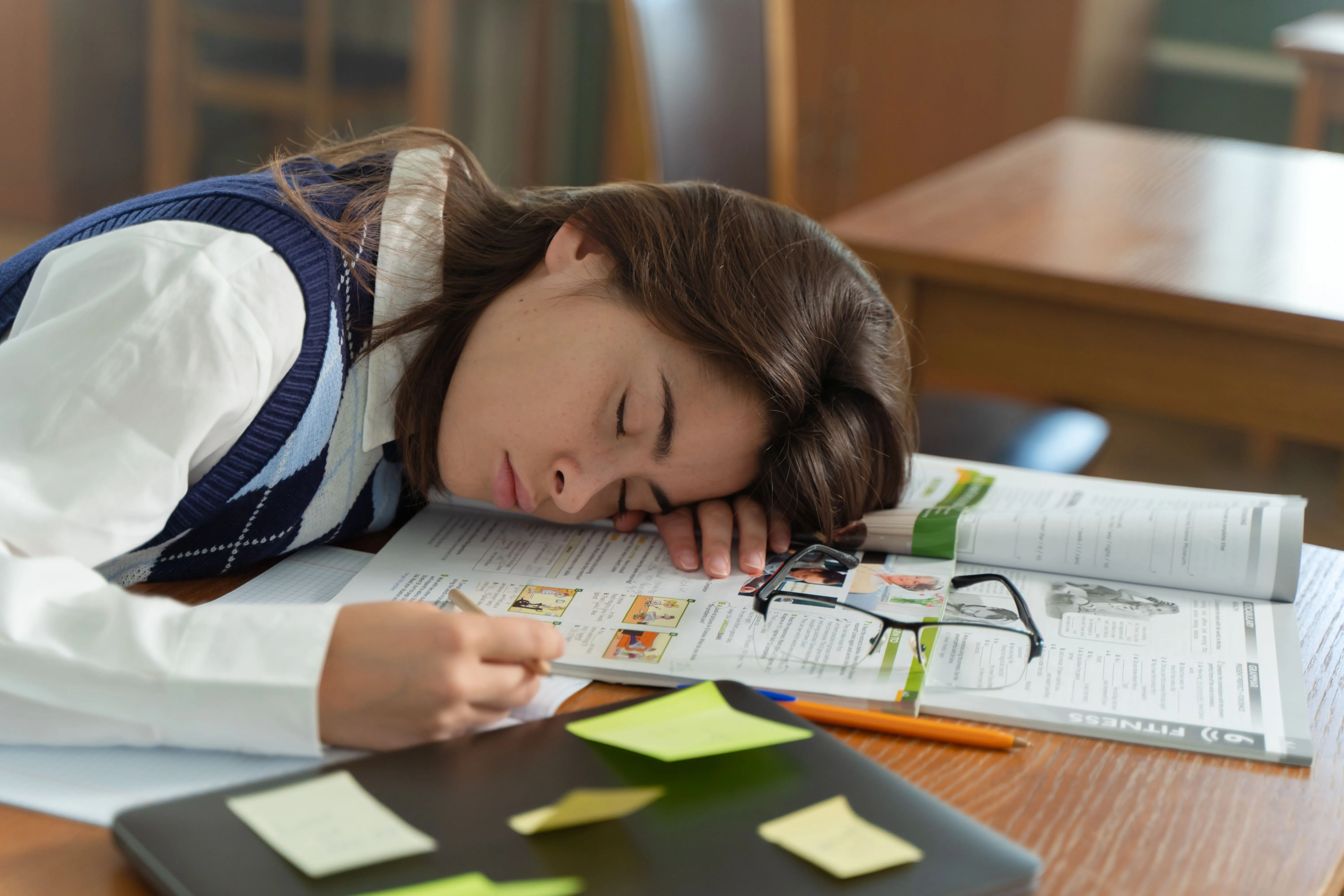
Students often view sleep as a reward that they can have after everything else is done. The problem is that schoolwork is rarely truly done. There is almost always another reading, another assignment, another message, and another thing that could be done.
A healthier perspective is to treat sleep like it is part of the routine. That is not to ignore deadlines or pretend that every student has an equally flexible schedule. Some students have long commutes, responsibilities at home, jobs, and other obligations that make a perfect sleep schedule impractical.
It simply means that cutting sleep should not be the first option when time becomes tight.
There is a difference between having one rough night and living on too little sleep regularly. One rough night is not the same thing as a long-term pattern. The bigger issue is when exhaustion becomes a regular occurrence and students treat constant tiredness as simply part of being a student.
Finding a routine that actually works
There is no one bedtime that works for everyone. What matters is whether the routine gives the student enough opportunity to sleep and whether it can realistically be maintained.
For some students, the biggest change might be putting the phone away earlier. For others, it might mean doing homework earlier in the evening, preparing school things ahead of bedtime, or keeping a consistent wake-up time. A student with a long commute does not have as many options as a student who lives five minutes from school.
The point is not to find the perfect lifestyle, but to make sleep less negotiable when the schedule becomes crowded.
Sleep also deserves attention when problems persist. Regular difficulty falling asleep, waking up during the night, and excessive daytime sleepiness, among other issues, are not things that students necessarily have to simply put up with. Persistent problems can be worth discussing with a qualified health professional.
A little more sleep can change the day
Sleep is easy to ignore because it occurs while we are not doing anything that looks productive. There is no finished assignment at the end of it and no grade attached to going to bed on time.
But the next morning still arrives.
A student who gets enough rest is not guaranteed better grades, and sleeping longer cannot replace studying, good teaching, and other forms of support. Sleep can give the body and mind a better starting point for the day.
For students, that may be the best way to think about sleep: not as lost time, but as one of the routines that makes the rest of the day possible.
Sources
American Academy of Sleep Medicine. (2019). Teen Sleep Duration Health Advisory. Teen Sleep Duration Health Advisory
Czeisler, M. É., et al. (2023). Sleep Duration, Mental Health, and Increased Difficulty Doing Schoolwork Among High School Students During the COVID-19 Pandemic. Preventing Chronic Disease, 20. Full text / PubMed Central
Dills, A. K., & Hernandez-Julian, R. (2021). Changing school start times: impact on sleep in primary and secondary school students. Sleep Medicine Reviews, 60. Full text / PubMed Central
Macapagal, M. E. B., et al. (2021). The Assessment of Lifestyle Status among High School and College Students in Luzon, Philippines. International Journal of Environmental Research and Public Health, 18. Full text / PubMed Central
Musshafen, L. A., et al. (2021). Associations between sleep and academic performance in US adolescents: a systematic review and meta-analysis. Sleep Medicine, 83, 71–80. PubMed record
Peltzer, K., et al. (2026). Longitudinal prevalence and correlates of short and long sleep duration among Filipino children and adolescents. Sleep Medicine. PubMed record