Research Skills
Research, Writing & Academic Integrity
Responsibly using sources, effectively writing, citing, and upholding academic integrity are key components of research.
…and then what?
Only part of the work of research lies in finding sources. Researchers must also understand what they find, choose what to include and how to interpret it, and clearly convey it.
Writing is inherently a part of research. A research paper is not a mere collation of what has been found elsewhere. It should reflect the writer’s understanding of the topic, what they have organized, and their perspective on the research question.
Effective research writing requires more than grammatical competence. It requires proper representation of sources, logical explanation, and elaboration that helps readers follow what the researcher has found and why it is significant.
Not making the writer invisible
Quotations, paraphrases, and summaries are part of research writing.
A quotation is the verbatim reproduction of a source’s words, usually with attribution. A paraphrase explains a source’s ideas in the writer’s own words, and a summary condenses a larger source’s argument. All are properly attributed despite the changes from the original (Purdue OWL).
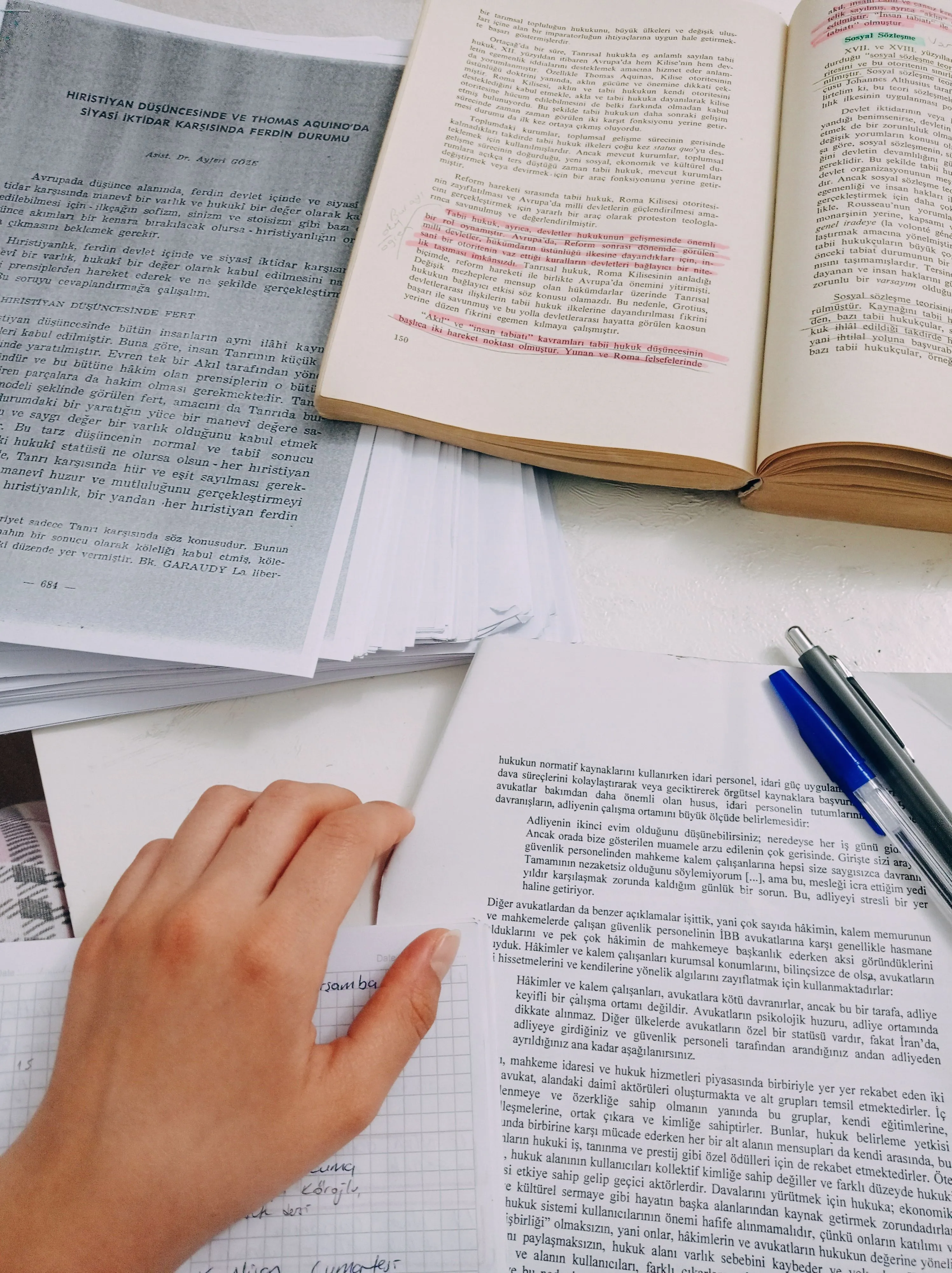
The aim is not to make the writer invisible. Sources should help explain, build upon, or add context to a writer’s research topic or question. A paper becomes hard to follow when quotations, paraphrases, and summaries are placed one after another without commentary on how they relate to the task at hand.
“Quotations must be identical to the original, using a narrow segment of the source.”
Purdue Online Writing Lab
Paraphrasing is more than substitution
One common paraphrasing mistake is changing only a few words in a sentence while leaving its structure and phrasing too similar to the original. Instead, paraphrasing should begin with understanding the source material, setting it aside, and expressing that understanding in the writer’s own words. Changing a few words is not enough to turn borrowed wording into a genuine paraphrase (Purdue OWL).
The original source should still be cited. Citation does not make borrowed language acceptable as paraphrasing, and changing a few words does not make someone else’s phrasing one’s own.
This is why careful note-taking is important. Separating quotations from notes or ideas helps the writer sort what came from a source and what did not, minimizing accidental plagiarism.
Not just quotations
Citation is often viewed as necessary only when verbatim quotation is used. But in research writing, sources should also be cited when paraphrasing or summarizing others’ ideas, findings, arguments, information, and interpretations. Visuals such as charts, photos, and diagrams may also need credit, depending on what is being used and the requirements of the work.
By citing sources, writers let readers trace important arguments or findings back to their sources. This establishes how the writer’s discussion connects to prior research.
Different fields use different citation systems, such as APA, MLA, and Chicago. Despite their differences, they share the purpose of identifying a source well enough for readers to understand what information has been borrowed and what work it came from.
Intentional or not
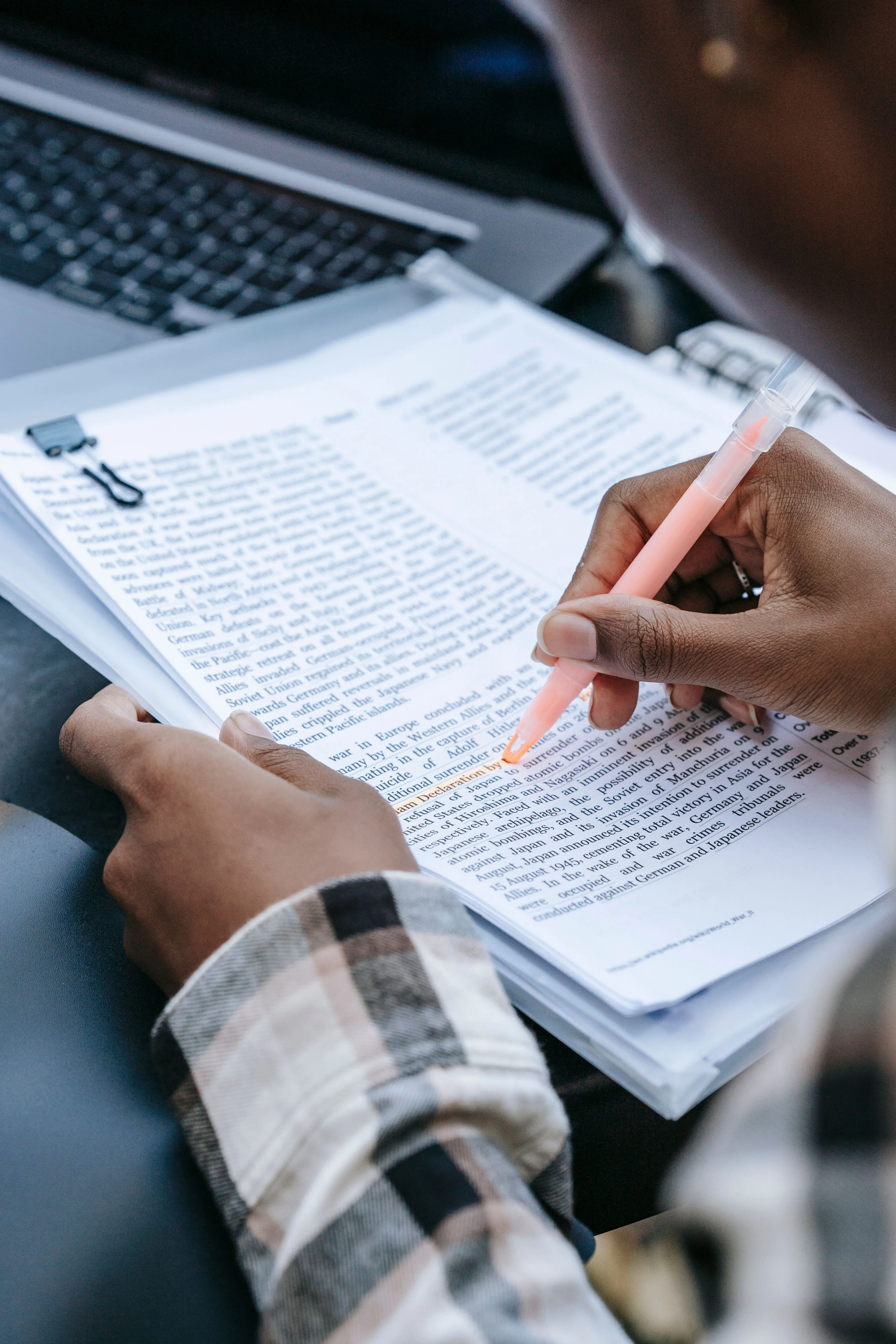
Plagiarism generally occurs when a writer presents someone else’s words or ideas as their own, without acknowledging who said or wrote them in the first place. Sometimes this is done deliberately, by presenting someone else’s work or ideas as one’s own. It can also be unintentional, when the writer forgets or does not know how to properly paraphrase or acknowledge the source of their findings (Purdue OWL).
“Plagiarism is using someone else’s ideas or words without giving them proper credit.”
Purdue Online Writing Lab
This does not make plagiarism any less of a problem. It does show, though, why learning research-writing practices is more useful than treating plagiarism only as a disciplinary issue.
A writer working with many sources can easily attribute the wrong idea to the wrong author, forget where a quotation came from, or write a paraphrase too similar to its source. Proper note-taking and citations can help avoid such issues.
Similarity does not equal plagiarism
Plagiarism-detection software can be helpful, but a similarity score should not be used as a measurement of academic dishonesty.
Research papers can have legitimate similarities due to quotations, technical jargon, titles, references, or commonly used phrases in a field. On the other hand, a paper with a low similarity score is not automatically free from plagiarism.
What matters is how the similarities are used and whether the paper properly acknowledges the sources it draws from. Detection software can help identify passages that deserve closer examination, but interpreting those similarities still requires human judgment.
A 2018 study of 61 teacher-education students of a Philippine state university found that the similarity index of research manuscripts decreased after students underwent a two-week intervention using Turnitin. The study also found factors such as academic culture, resourcefulness, and plagiarism-detection efficacy to be relevant to plagiarism prevention (Roman, 2018).
Academic integrity is not a list of what not to do
Academic integrity is not a simple list of things students are not allowed to do. The International Center for Academic Integrity defines it through six fundamental values: honesty, trust, fairness, respect, responsibility, and courage (ICAI, 2021).
“The International Center for Academic Integrity defines academic integrity as a commitment, even in the face of adversity, to six fundamental values: honesty, trust, fairness, respect, responsibility, and courage.”
International Center for Academic Integrity (ICAI)
These values apply to research and writing in general. Honesty means representing sources and findings accurately; responsibility means being diligent with data, citations, and submitted work; and respect means giving credit where it is due. Fairness and trust are also important, as research relies on readers’ ability to trust the information and contributions presented.
Academic integrity should concern the entire research process, not only the citation of sources at the end of a paper.
Research writing skills are developed
Students do not automatically become competent research writers simply by being asked to write research papers. Research writing involves a number of skills that must be built over time.
A 2024 study of 315 Grade 12 students in the Philippines found that students’ overall competence in research writing was moderately high, with varying levels of competence across academic tracks. The study recommended regular practice, feedback, mentoring, and stronger integration of research skills throughout the curriculum (Cuayzon, 2024).
A 2024 study of 51 sophomore English Language Studies students at Benguet State University examined their proficiency in APA citation. The study found that 43 of the 51 students, or 84.31%, were classified as not proficient in the APA citation exercise, while only one student was classified as proficient (Paleyan & Fausto, 2024). The study focused specifically on citation proficiency rather than treating citation as a general measure of writing ability.
These studies involve specific groups of students and should not be treated as representative of all Filipino students. They do, however, highlight why research writing and citation are skills that should be taught rather than assumed.
Be aware of research tools and AI
Digital tools can make research and writing easier, but convenience does not eliminate the writer’s responsibility to verify and correct their output.
A tool can help with organizing notes, checking grammar, formatting citations, or writing in general. It can also provide incorrect information, misread a source, fabricate references, or make unfounded claims. The person submitting the work is responsible for checking the tool’s output.
A 2025 multiple-case study involving five senior high school student cases from selected public and private institutions in Region XI found that students used AI tools for purposes such as grammar assistance, organization, and confidence-building, while differences also emerged in AI dependence, originality, fact-checking, and ethical awareness (Sigaboy & Adriano, 2025).
Using a tool responsibly means understanding its limitations, checking its output against reliable sources, and remembering that a tool’s use may not comply with the requirements of a school, instructor, or publication. A tool should support the writer’s work rather than replace the writer’s responsibility for it.
Keep track of your sources
Many citation issues stem from before the writing process begins.
When gathering information, it can be helpful to record the author, title, publication, date, link or identifier, and the information being used. Keeping quotations separate and marking them as such can also help distinguish them from one’s own notes.
Organizing sources during research may seem time-consuming, but it can save time when writing and help the writer trace a claim back to its source later.
This becomes increasingly important as the number of sources increases. A researcher who cannot trace a statistic, quotation, or idea back to its source may have difficulty verifying or citing it correctly.
Good research writing is about accountability
Research writing ultimately comes down to accountability. It is not enough for the writer to simply argue a point; they must also represent the evidence for that argument honestly.
This means acknowledging where information comes from, differentiating others’ ideas from one’s own, explaining evidence properly, and being willing to correct mistakes. It also means understanding that academic integrity is not merely a matter of avoiding penalties.
It is about accountability because it is about what matters to readers. Research becomes more meaningful when the writer respects sources, evidence, and the contributions of others.
Sources
International Center for Academic Integrity. Fundamental Values of Academic Integrity.
Purdue Online Writing Lab. Quoting, Paraphrasing, and Summarizing.
Purdue Online Writing Lab. Plagiarism Overview.
Roman, Adriel Gurnot. Minimizing Plagiarism Incidence in Research Writing in One State University in the Philippines.
Cuayzon, Mark Lester C. Research Writing Competence of Grade 12 Students: Towards Research Culture Improvement.
Paleyan, Jessa S., and Howard B. Fausto. Proficiency of Sophomore English Language Students on the Use of APA Citation.
Sigaboy, Elda P. Saya-ang, and Teresita Q. Adriano. The Role of AI Tools on the Research Writing of Senior High School Students in Region XI: A Multiple Case Study.