Research Skills
Misinformation & Online Information
Online information can become widely shared, making it essential to distinguish questionable claims before accepting or passing them on as reliable.
Information can spread before it is checked
While the internet has made it much easier to find and share information, it has also made it easier for false information to proliferate.
A post can be widely shared before anyone has identified its source, examined whether the evidence supports the claim, and considered whether the evidence was being used correctly.
This does not mean that information on the internet is inherently unreliable; the internet contains academic research, government information, news, educational resources, and other reliable information.
The issue is that reliable and unreliable information can be found side by side, sometimes in very similar formats.
This means that media and information literacy involves learning how to engage carefully with information rather than taking or rejecting everything encountered online (UNESCO, 2023).
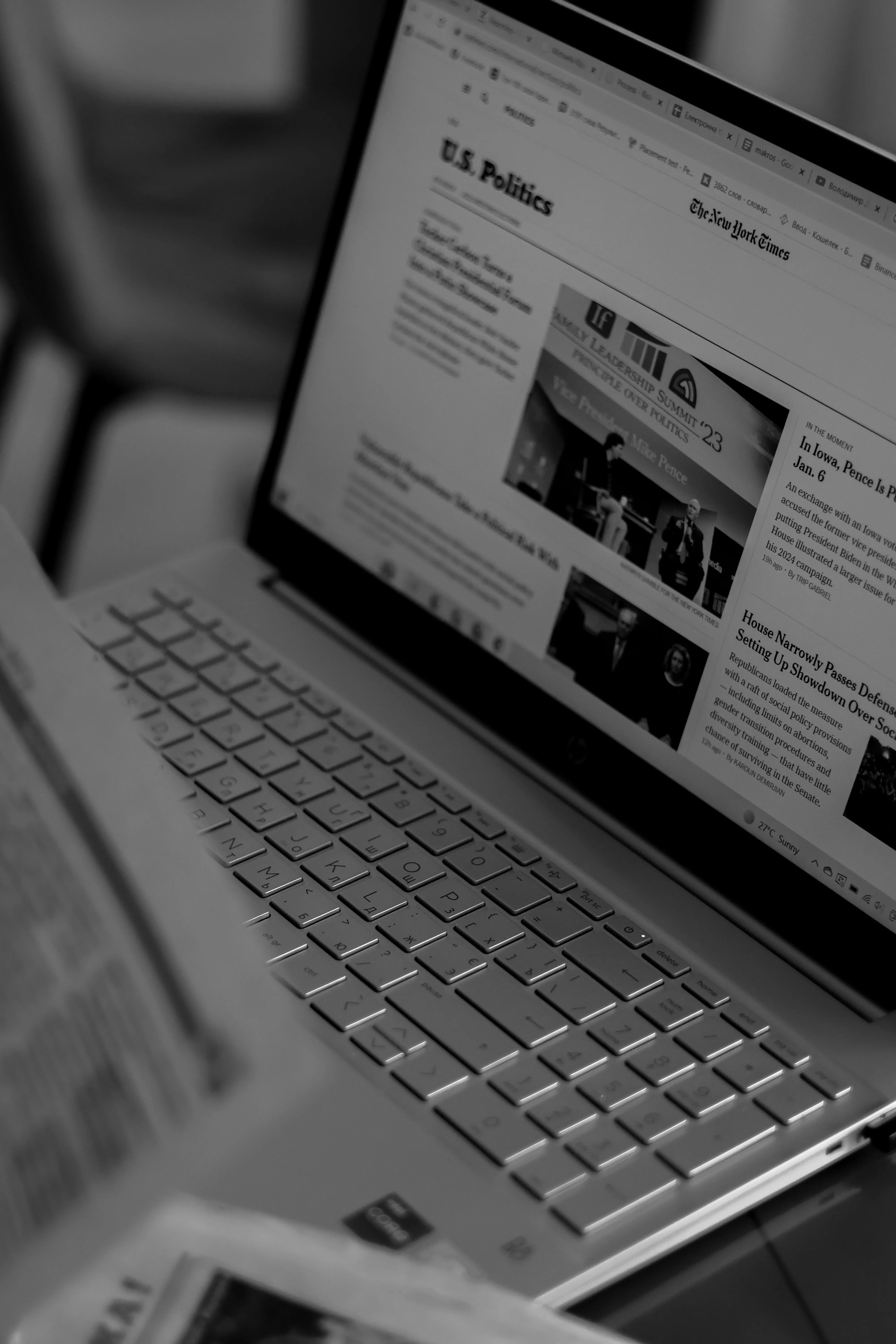
Misinformation is not always deliberate
The terms misinformation and disinformation are often used interchangeably, but they describe different phenomena. Misinformation is false or inaccurate information shared regardless of whether the person sharing it knows it is false. Disinformation involves false or misleading information deliberately created or shared to deceive or influence others.
It is important to distinguish the two because not every person who shares false information is doing so deliberately.
Someone might share an outdated health recommendation they believe is correct, or repost a statistic without looking into where it originated.
Recognizing the difference makes it easier to focus on correcting information rather than always assuming the intentions of everyone who shares it.
Why questionable information can look convincing
Misinformation does not always look obviously false; a post can include a photograph, a statistic, a quotation from an “expert,” or even a link to a legitimate organization.
A misleading claim can also combine accurate information with an incorrect conclusion.
How information is presented can affect how readers react to it; a professional-looking graphic does not ensure that the information is accurate, just as a poorly made graphic does not ensure that it is false (UNESCO, 2023).
This is why source evaluation and misinformation detection overlap: readers must go beyond what they see and look into who may have created the information, whether they used accurate evidence, and whether other sources confirm it.
Social media can amplify information
On social media, information can spread quickly through friends’ groups, followings, and other networks.
A claim can appear multiple times from accounts a person follows, reinforcing the claim even when those accounts are drawing from the same source.
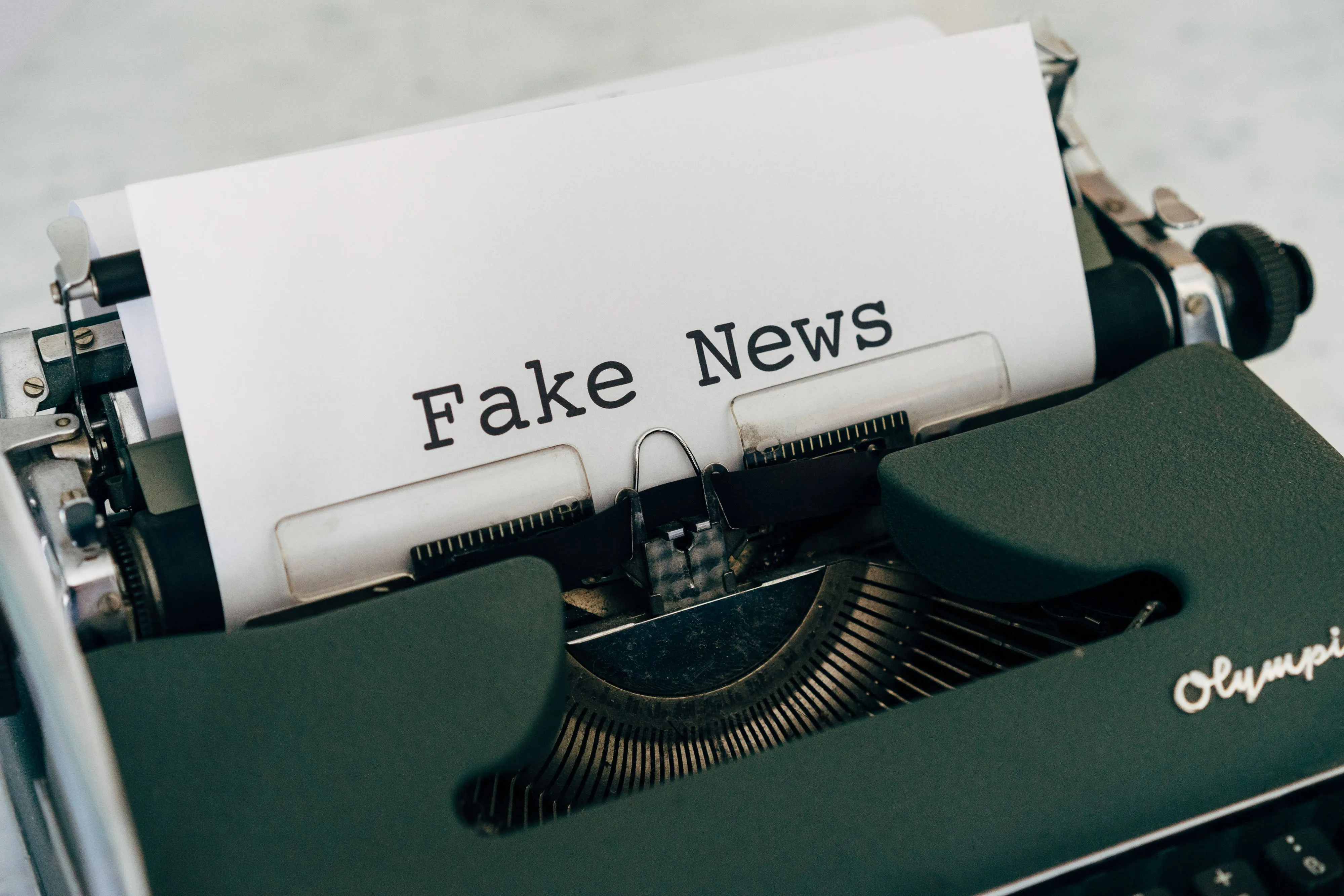
Research on Filipino university students has found that social-media behaviors can be associated with susceptibility to political disinformation.
In a 2022 study of students attending four private universities in Manila, confirmation bias was associated with higher susceptibility to fake news, while seeking expert opinions was associated with lower susceptibility (Bringula et al., 2022).
This does not mean that social-media users are incapable of identifying information; it shows the importance of information environments.
When people regularly encounter information that aligns with their beliefs and expectations, they may be less likely to question it.
Stop before sharing
One of the easiest ways to respond to questionable information is to pause before sharing it.
A statement is no more reliable because many people have shared it, or less reliable because few people have shared it.
Likewise, a statement is no more true when people express urgency around sharing or forwarding it. A claim urging people to “share this before it gets deleted” should be a reason to pause before sharing.
A brief pause can give someone space to start evaluating the claim: where did the information originate? When was it published? Is the original source identifiable? What evidence does it offer? Can the claim be found in another source?
These are not necessarily questions a person has to answer to be a “professional fact-checker.” They are common-sense information-literacy practices that can help avoid sharing claims that have not been verified.
Check the original source
When a post contains a claim, it is often useful to look at the source of the post itself.
A screenshot of an article is not the article, and a quotation copied into a post can omit the context that gives it meaning.
Checking the original source can help someone identify when the information was published, what evidence was used to support the claim, and what other information has been cited or referenced alongside it.
It can also help identify whether a statistic has been altered, an image has been incorrectly attributed, or an old story has been recycled as a new one.
This habit is especially useful when a claim seems to be cited repeatedly; several posts containing the same statement may ultimately come from the same source.
Compare before believing
Finding a single source that confirms a claim is a useful beginning, but comparing information from several credible, independent sources can provide more corroboration, especially if the sources use different types of evidence.
A claim about a public-health issue, for instance, might be compared with information from the government, a reputable medical institution, and relevant research.
If the claim is about an event, established news outlets and other trustworthy organizations can provide additional corroboration.
The point is not to seek out as many links as possible, or to look for sources that say the same thing, but to determine whether different sources independently support the claim and whether there are discrepancies that need to be understood.
Be careful with images and statistics
Images and graphs can be compelling pieces of evidence because they suggest that a statement or conclusion is grounded in visual evidence, but this does not necessarily mean that it is.
A photograph can be used to support a statement, but it can also be reused in another context, altered, or appear with misleading captions on social media.
The same concerns apply to graphs, statistics, and other representations: the format of the information does not ensure its accuracy.
People examining statistics should be cautious of claims that use percentages without clearly identifying the numbers, timeframe, population, or other context that makes the statistic meaningful.
The same considerations apply to polls and surveys; a large number of respondents does not ensure a representative sample, and how respondents were asked and who the researchers were targeting can affect the outcome.
Look for corrections and uncertainty
Information literacy is not about assuming that every source will provide complete certainty; it is about assessing how reliable the available information is and recognizing when evidence is incomplete or subject to change.
This matters in science, journalism, and public institutions, where information can be updated as new evidence emerges.
Readers should examine dates, corrections, and qualifications. A responsible source can acknowledge what is known, what remains uncertain, and what limitations affect the information being presented.
Filipino students and misinformation
The ability to identify misinformation is important for students, as they regularly engage in information-sharing and social media.
A 2023 study by Fajardo involving 424 senior high school, undergraduate, and postgraduate students found that many participants demonstrated “beginning” competency in tasks such as author-checking, fact-checking, and bias-checking, while image-checking skills reached “emerging” status. The findings suggest that information and media literacy skills still need to be strengthened among the students represented in the study (Fajardo, 2023).
“This study indicates the need to strengthen Filipino students’ information/media literacy across educational levels.”
Fajardo (2023)
Other Philippine studies point to opportunities for improvement while also illustrating the role of information literacy in developing these skills. Gadia and Tudy’s study of 141 Bachelor of Library and Information Science students from Regions XI and XII found high levels of information skills and misinformation-evaluation skills. Information skills and media-literacy instruction were significant predictors of students’ misinformation-evaluation skills (Gadia & Tudy, 2021).
“both of the two independent variables, namely Information Skills and Media Literacy Instruction, can significantly influence the respondents' misinformation evaluation skills.”
Gadia & Tudy (2021)
More recent Philippine research continues to explore how schools can respond. A 2025 systematic review of 20 peer-reviewed studies on misinformation and disinformation in Philippine education identified classroom and institutional strategies that use media and information literacy, along with continued challenges such as implementation issues, limited teacher training, and limited resources (Baja & Borja, 2025).
“inconsistencies in the curriculum, lack of professional training for teachers, and limited available resources hinder the successful cultivation of students equipped with critical thinking and MIL skills.”
Baja & Borja (2025)
These findings should not be interpreted to mean that Filipino students are inherently good or poor at identifying misinformation. They indicate that information evaluation is a skill that varies across groups and can be improved through education and practice.
Information literacy is an ongoing habit
There is no trick that will identify every piece of information correctly; a claim can originate from a familiar website and still be false, or come from an unknown account while including accurate information.
Even well-documented, well-established organizations can publish information that ultimately needs to be corrected.
The important habit is to check consistently: pause before sharing, trace claims to their sources, examine the evidence and context they offer, and compare claims that are important to verify.
When the evidence is unclear, it is often best not to take it as proof of anything.
Online information does not need to be feared; it should be approached more carefully.
The point of information literacy is not to teach people to expect all information to be misleading, but to make them more careful about what they accept, question, and share.
Sources
UNESCO. Media and Information Literacy.
Bringula, Rex P., Annaliza E. Catacutan-Bangit, Manuel B. Garcia, John Paul S. Gonzales, and Arlene Mae C. Valderama. “Who is gullible to political disinformation?”: Predicting susceptibility of university students to fake news.
Fajardo, Margarita Felipe. Filipino Students’ Competency in Evaluating Digital Media Content Credibility: “Beginning” to “Emerging” Levels.
Gadia, Eva Carla F., and Ida G. Tudy. Influence of Information Skills and Media Literacy Instruction to Misinformation Evaluation Skills Among College Students.
Baja, John Paul P., and Ruben E. Borja II. Countering Misinformation and Disinformation in Philippine Education: A Systematic Review of Strategies, Challenges, and the Role of Media and Information Literacy.